Moving a kitchen to a different room typically costs £15,000–£40,000+ on top of the normal cost of the kitchen itself, because you're not just fitting units — you're relocating water supply, waste, gas (if you cook with gas) and a full electrical circuit to a room that was never built for any of it. The single biggest cost driver is how far the new location is from your existing soil stack and water supply, not the kitchen units themselves.
What actually costs money when you relocate a kitchen
Four things push the price up, roughly in order of impact:
- Plumbing runs. Waste water needs a fall towards the soil stack (the pipe that carries waste to the sewer). The further the new kitchen is from the stack, the more floor needs to come up to lay new pipework, and in some layouts a macerator or additional falls are needed to make drainage work at all.
- Electrics. A kitchen needs its own dedicated circuits for the cooker, and usually a second circuit for sockets and appliances, run back to the consumer unit. If the new room is on the opposite side of the house, that's a long cable run, potentially through walls and floors that need making good afterwards.
- Gas. If you cook with gas, moving the supply requires a Gas Safe registered engineer, and depending on the route, this can mean lifting floors or chasing walls. Some homeowners switch to induction at this point specifically to avoid the cost and disruption of moving a gas run.
- Structural and finishing work. The room you're moving into (often a former dining room, utility room, or reception room) needs new flooring suitable for a kitchen, often a new door opening or removed wall for an open-plan layout, and redecoration throughout.
Typical cost ranges
As a rough UK guide: moving a kitchen to an adjacent room with a relatively short plumbing/electrical run might add £8,000–£15,000 on top of the kitchen fit-out cost. Moving to a room on the opposite side of the house, or up/down a floor, can add £20,000–£40,000+, especially if it involves removing a structural wall, adding a rooflight, or extending drainage runs significantly. These figures are on top of the kitchen renovation itself, not instead of it.
Do you need planning permission or building regulations approval?
Moving a kitchen within your existing house generally doesn't need planning permission, but it will need building regulations approval for the new electrical circuits (Part P), plumbing/drainage, and ventilation. If you're knocking through a wall to create an open-plan space, a structural engineer's calculation and building control sign-off are needed regardless of whether the wall is load-bearing — always get this checked before any wall comes down.
Common mistakes
- Underestimating the drainage run. A kitchen sink and dishwasher need proper falls to drain correctly — a long, flat run can cause recurring blockages. Get a plumber to assess feasibility before you commit to a layout.
- Forgetting ventilation. Building regulations require kitchen extraction, and if the new room has no external wall nearby, ducting can become a real design challenge.
- Not budgeting for the vacated room. Whatever room you're moving out of also needs finishing to a liveable standard — this is easy to forget when budgeting only for the new kitchen.
Use our kitchen cost calculator to estimate the fit-out cost, then add a realistic allowance for the plumbing, electrical and structural work above based on the distance and complexity of your move.
Open-plan kitchen-diner: a common reason to move a kitchen
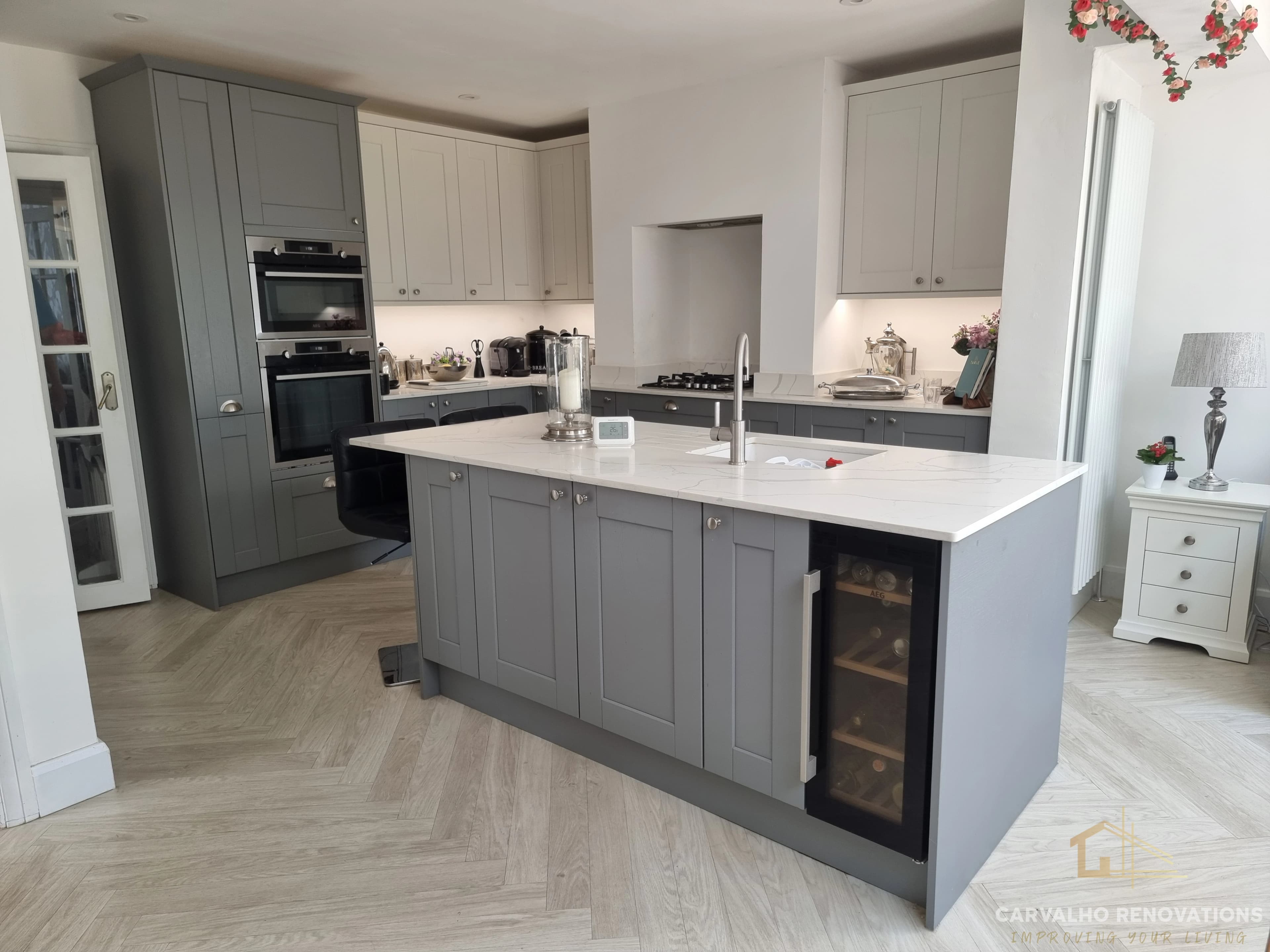
One of the most common reasons homeowners relocate a kitchen is to create an open-plan kitchen-diner, often by moving the kitchen into a former dining room or knocking through to a reception room. This adds the cost of a structural opening (and possibly a steel beam) on top of the relocation costs above, but it is also one of the renovations most consistently cited by estate agents as adding buyer appeal, particularly in family homes. If this is your goal, get a structural engineer involved early, since the beam size and cost depend on the span and the loads above it.
Gas vs induction when relocating
Because moving a gas supply is one of the more disruptive and regulated parts of a kitchen relocation, it is worth genuinely weighing up switching to induction at the same time. Induction hobs need a strong dedicated electrical circuit rather than a gas run, and if you are already having an electrician in for the move, adding this circuit is a relatively small incremental cost compared with routing gas pipework to a new location, especially over a longer distance.
Frequently asked questions
Related calculators
Related services
Related articles
How Much Does a Kitchen Renovation Cost in the UK?
Kitchen renovation costs vary more than almost any other room in the house — mostly down to units and appliances, not labour. Realistic UK ranges and what actually drives the price.
Kitchen Cabinet Refacing vs Full Kitchen Replacement: Which Should You Choose?
Refacing cabinet doors can transform a kitchen's look for a fraction of the cost of a full replacement — but it isn't right for every situation.
Integrated vs Freestanding Appliances: Which Is Better for Your Kitchen?
Integrated appliances hide behind cabinet fronts for a seamless look; freestanding appliances are cheaper, easier to replace, and take them with you if you move.
Thinking about relocating your kitchen?
Carvalho Renovations can assess feasibility, plan the plumbing and electrical routes, and manage the full project from first fix to finished kitchen.
Get a Free Quote