The core trade-off is this: integrated appliances are built into your cabinetry and hidden behind matching cabinet fronts for a seamless look, while freestanding appliances stand on their own, are generally cheaper, and can be taken with you if you move house. Neither is universally better — the right choice depends on your budget, the look you want, and whether you plan to stay in the property long-term.
Cost
Freestanding appliances are almost always cheaper than their integrated equivalents for a like-for-like specification, since integrated models need to be built to fit precisely within standard cabinet dimensions and often cost more for the engineering involved. You're also paying for the matching cabinet door itself, which adds to the overall kitchen cost even though it's technically part of the joinery rather than the appliance.
Look and finish
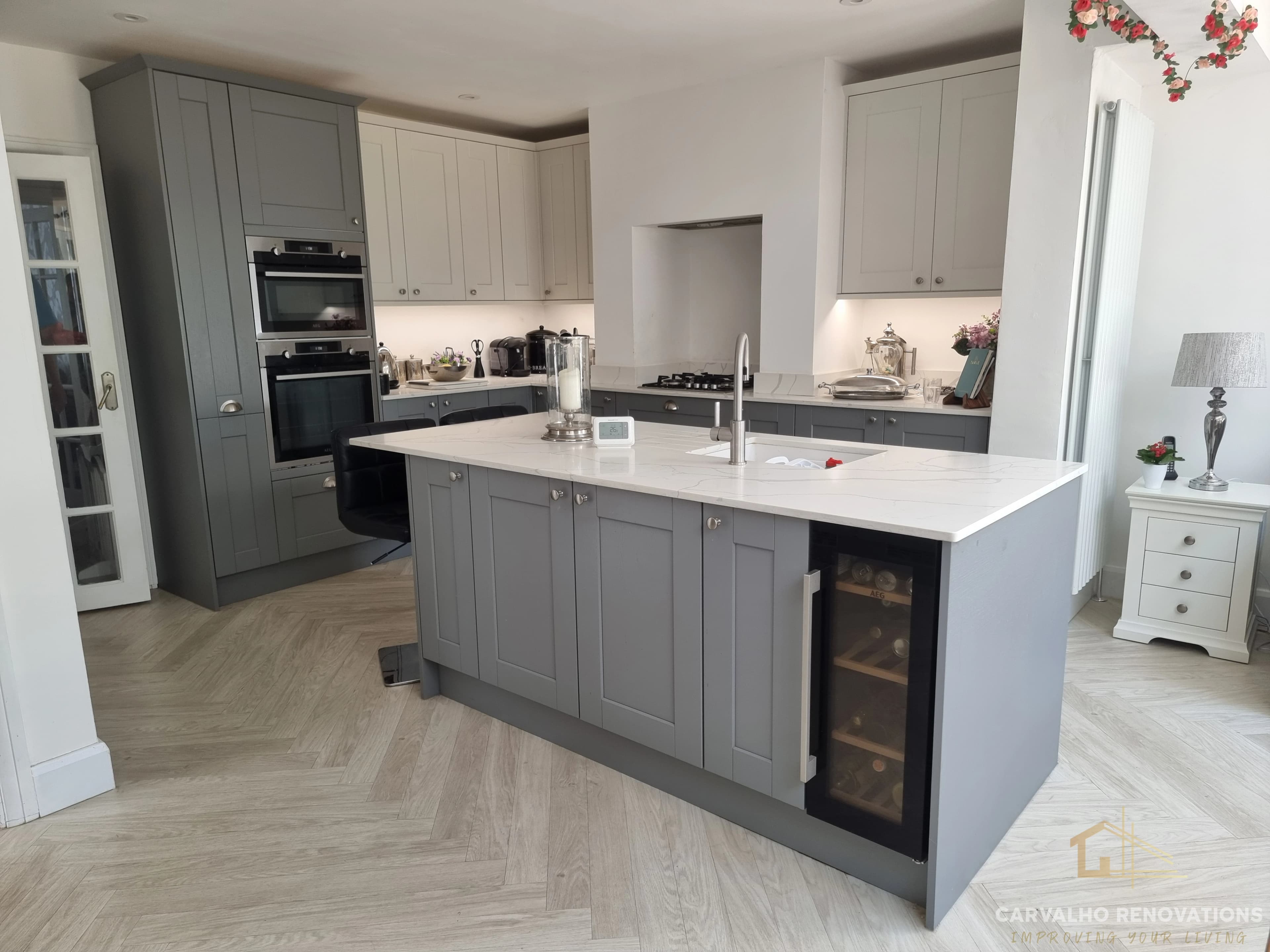
Integrated appliances are the main reason a kitchen can look completely seamless, with no visible fridge, dishwasher or washing machine breaking up the run of cabinetry — popular in modern, minimalist kitchen designs. Freestanding appliances are visible as their own units, which some people prefer stylistically (a statement freestanding range cooker, for example, is often chosen specifically to be seen) but which others find breaks up an otherwise unified look.
Flexibility and moving house
This is a genuinely practical difference. Freestanding appliances belong to you and move with you — if you relocate, you simply take the fridge, oven or washing machine to the next property (space and connections permitting). Integrated appliances are built into that specific kitchen's cabinetry and are typically left behind as part of the fitted kitchen when you sell, which affects both your moving costs and, to some extent, the property's sale value (a well-integrated kitchen with quality appliances can be a selling point).
Repairs and replacement
Freestanding appliances are usually simpler and cheaper to repair or replace, since there's no cabinet door and hinge mechanism to remove and refit, and you're not constrained to buying a model specifically designed to integrate into your existing cabinet opening. Integrated appliance replacement needs to match the exact dimensions of the cabinet cut-out, which can narrow your choice of replacement model years down the line if the original is discontinued.
Noise and ventilation
Integrated appliances sit inside an enclosed cabinet, which can slightly muffle noise from a washing machine or dishwasher compared with a freestanding equivalent in an open room — a small but noticeable benefit in an open-plan kitchen-diner. On the other hand, enclosed cabinetry needs proper ventilation gaps for appliances that generate heat, particularly integrated fridges and freezers, so the cabinet design has to account for this rather than sealing the appliance in completely, or efficiency and appliance lifespan can suffer.
Energy efficiency considerations
Energy ratings apply equally to integrated and freestanding versions of the same appliance type, so neither category is inherently more efficient — what matters is the specific model's rating, not whether it's built in. That said, an integrated appliance enclosed within cabinetry can run slightly warmer than a freestanding one with open airflow on all sides, which is why manufacturers specify minimum ventilation gaps for integrated installations; ignoring these can genuinely affect both efficiency and the appliance's working life.
When comparing running costs between two specific models, it's the energy rating label that matters far more than whether an appliance is built in or freestanding — always check this directly rather than assuming one category is automatically more efficient than the other.
Which should you choose?
- Choose integrated if: you want a seamless, high-end look, you're not planning to move soon, and budget allows for the premium.
- Choose freestanding if: budget is a priority, you may move house and want to take appliances with you, or you want the flexibility to replace individual appliances easily.
Common mistakes
- Mixing integrated and freestanding without planning the layout. A freestanding fridge next to integrated units can look unintentional rather than a deliberate style choice unless the design accounts for it.
- Not checking cabinet door weight limits for integrated appliances. Some integrated fridges and dishwashers have specific limits on the door panel weight and size they can support.
For the full cost of a kitchen renovation including appliances, see our UK kitchen renovation cost guide, and if you're weighing up fitted vs flat-pack cabinetry too, see our fitted vs flat-pack kitchens comparison.
Frequently asked questions
Related services
Related articles
Fitted vs Flat-Pack Kitchens: Which Should You Choose?
Fitted kitchens are made to measure and typically cost more; flat-pack kitchens are pre-made standard sizes and cost less but need more careful planning around your room's exact dimensions.
How Much Does a Kitchen Renovation Cost in the UK?
Kitchen renovation costs vary more than almost any other room in the house — mostly down to units and appliances, not labour. Realistic UK ranges and what actually drives the price.
Kitchen Cabinet Refacing vs Full Kitchen Replacement: Which Should You Choose?
Refacing cabinet doors can transform a kitchen's look for a fraction of the cost of a full replacement — but it isn't right for every situation.
Deciding between integrated and freestanding appliances?
Carvalho Renovations can help you plan a kitchen layout that works for either choice, or a mix of both.
Get a Free Quote