Carpentry and joinery cost is one of the widest-ranging figures in home renovation, because the category covers everything from a single replacement skirting board to a fully bespoke, fitted staircase. What you're actually paying for — and how much of it is material versus skilled labour — changes completely depending on what you're having done.
Off-the-shelf vs bespoke
The single biggest factor in carpentry cost is whether you're buying a standard, mass-produced item and having it fitted, or having something designed and made specifically for your space. A standard internal door, a flat-pack-style fitted wardrobe carcass, or pre-made skirting board are all considerably cheaper than an equivalent bespoke version — not because the fitting labour is different, but because the manufacturing time is.
Bespoke work earns its price where a standard item genuinely won't do the job well: an awkward alcove, a non-standard door opening, a staircase that has to fit an unusual stairwell shape. Where a standard product will do the job just as well, it's almost always the more cost-effective choice.
What drives carpentry labour cost
- Precision required — a door that needs to hang, close and latch correctly, or a staircase that has to meet building regulations for rise and going, takes more skilled time than fitting a shelf.
- Existing condition — an opening that's out of square, old fixings that need removing, or a wall that isn't flat all add real time before the actual carpentry work can start.
- Material — solid hardwood costs more to buy and is generally slower and more skilled to work than softwood or engineered/MDF alternatives.
- Access and site conditions — carrying long lengths of timber or large sheet material up stairs or through a tight property takes longer than working in an easily accessible room.
Material costs in more detail
Timber choice affects price more than most people expect. Softwood (pine, redwood) is the cheapest option and works well for painted skirting, architrave and simple joinery where the timber itself won't be on show as a finish. Engineered timber and good-quality MDF sit in the middle — stable, consistent, and well suited to painted fitted furniture. Solid hardwood (oak, walnut, ash) costs the most, both to buy and to work, but is the right choice where the timber's grain and finish are actually part of the look — a stained handrail, a feature door, exposed joinery.
A worked example: refitting a hallway
To make the ranges below more concrete: replacing three internal doors, adding new skirting through a hallway and landing, and fitting a run of understairs shelving in the same visit might realistically total somewhere in the £1,800–£3,200 range — largely because doing several jobs in one visit spreads the callout and setup time across more work, which is usually more cost-effective than booking each job separately.
Typical UK carpentry and joinery costs
These are broad, genuinely typical ranges for supply-and-fit — actual cost depends heavily on the factors above.
- Replacing an internal door (standard, supply and fit): roughly £150–£450 — see our interior door replacement guide for the full breakdown.
- Fitted wardrobes (per double bedroom, bespoke): roughly £1,200–£3,500 — see our built-in wardrobes guide.
- Staircase renovation (cladding/refacing an existing staircase, not a full rebuild): roughly £1,500–£4,500 — see our staircase renovation guide.
- Skirting and architrave (per room, supply and fit): roughly £300–£700 depending on room size and profile complexity.
How long carpentry work actually takes
Timescales vary as much as cost. A single door swap is usually a half-day job. A full room's skirting and architrave typically takes one to two days. Bespoke fitted wardrobes usually mean a site visit to measure, a lead time of one to three weeks for the pieces to be made (longer for solid hardwood), then one to two days to install. A staircase cladding job is typically two to four days depending on step count and whether spindles and handrail are being replaced too.
DIY vs professional carpentry
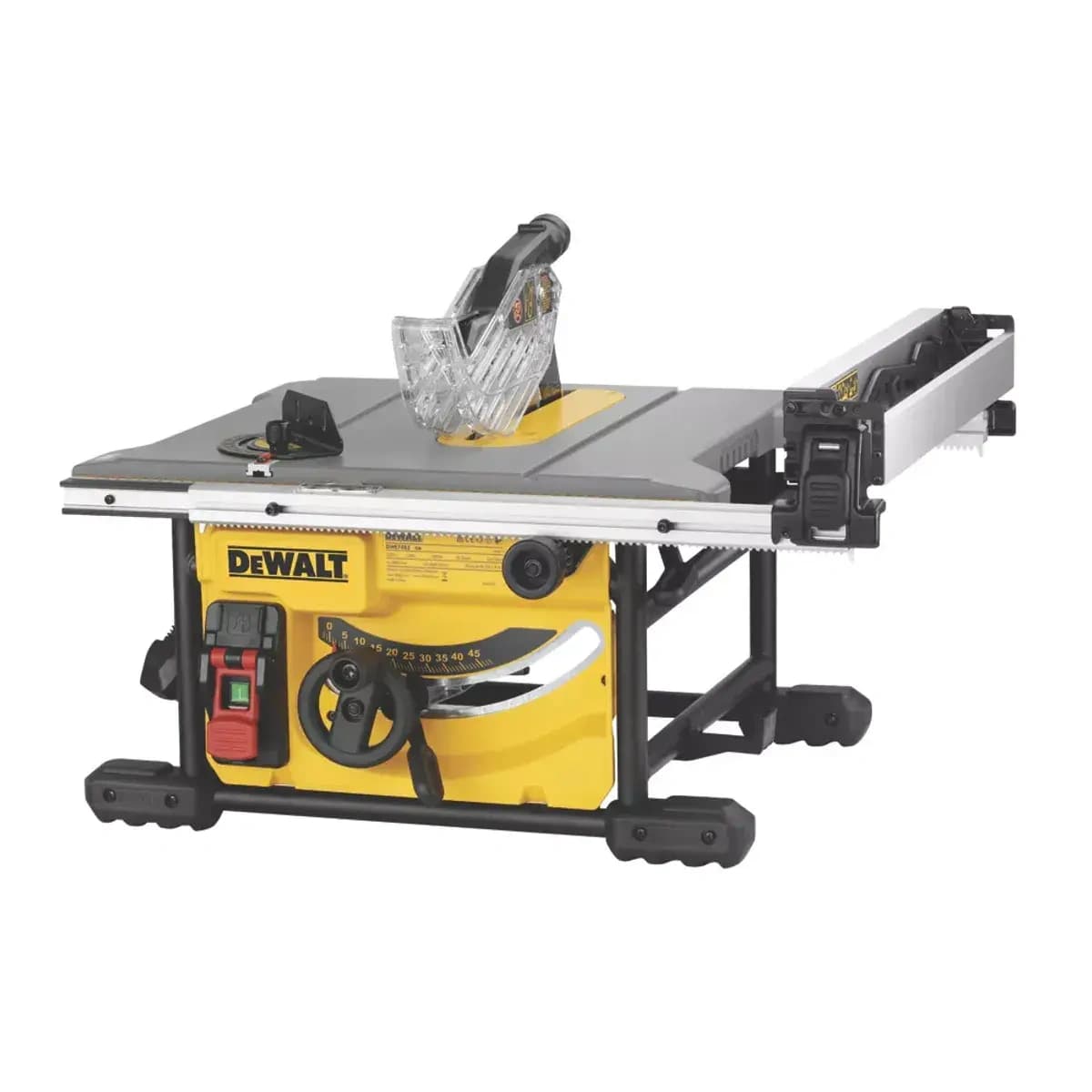
Simple, forgiving tasks — basic shelving, straightforward trim work in a room with square corners — are genuinely reasonable for a competent DIYer with the right tools. Precision cutting for anything that needs to fit exactly (a staircase component, a fitted wardrobe carcass, mitred trim in a room that isn't quite square) is much harder to get right without proper equipment — a track/table saw with a genuinely accurate fence, like the DeWalt 54V XR FlexVolt table saw we hire out, makes a real difference to cut accuracy versus a basic circular saw, but the skill of setting it up correctly still matters more than the tool alone.
Common mistakes
- Ordering by a single measurement. Openings and rooms are rarely perfectly square, especially in older properties — a design based on one measurement taken at one point often doesn't fit once you're on site.
- Mixing styles without a plan. Replacing one door or one section of skirting in a different profile or finish than the rest of the house is a common source of regret once it's done.
- Underestimating lead time for bespoke pieces. Solid hardwood, in particular, can take weeks to source and make — factor this into any renovation timeline that depends on it.
Getting an accurate quote
Because so much of carpentry cost depends on precise measurements and existing condition, the only reliable way to get an accurate price is a proper look at the space — a phone estimate can't account for whether an opening is square or a wall is flat. Our guides on interior doors, built-in wardrobes and staircase renovation go into more detail on each specific job.
Frequently asked questions
Related calculators
Related services
Related articles
Replacing Interior Doors: Cost and What to Consider
Replacing an interior door involves more than just the door itself — the frame, hardware and fitting all affect both the cost and how well it actually works. What to expect.
Built-In Wardrobes: Cost and What to Consider
Built-in wardrobes make good use of awkward space, but cost varies a lot between a simple carcass-and-doors job and a fully bespoke interior. What to expect.
Staircase Renovation Cost: What You'll Pay to Update Your Stairs
You don't always need to replace a staircase entirely to transform it — cladding, spindles and a new handrail can update the look for a fraction of a full rebuild. What to expect.
Have a carpentry project in mind?
From a single door to a full staircase, get a free, no-obligation quote.
Get a Free Quote