Quick answer: wall area (m²) ÷ 10-12m² per litre coverage × number of coats = litres needed, rounded up to the nearest tin size. That's the whole calculation — the two things people usually get wrong are measuring wall area instead of floor area, and assuming one coat will be enough.
A quick worked example
A double bedroom roughly 4m × 3.5m with a 2.4m ceiling height and one door, one window: perimeter (15m) × height (2.4m) = 36m² of wall, minus around 3.5m² for the door and window = 32.5m². At 10m² per litre for two coats, that's roughly 6.5 litres — typically bought as two 2.5-litre tins plus a 1-litre, or a 5-litre and a 2.5-litre.
How to measure your own room
Add up all four wall lengths for the perimeter, multiply by the ceiling height for total wall area, then subtract roughly 2m² per standard door and 1.5m² per standard window. Ceilings are measured separately — just floor area, length × width.
How many coats?
Two coats is the standard default, even over a similar colour — a single coat almost always looks patchy once dry. Budget for three coats (or two over a stain-blocking undercoat) going from a dark colour to a light one, and always give new plaster a diluted mist coat first.
Two mistakes that waste the most paint
- Calculating from floor area instead of wall area — the two numbers are rarely close, and floor area badly under-estimates what you need.
- Buying different batches of the same colour name — genuine batch-to-batch colour variation is real and visible on a flat wall, so check every tin before you start.
Use our Paint Calculator to get an exact figure for your own room's dimensions, door and window count, and coat number.
Want the full picture — room-by-room quantity guides, a sheen/finish choice by room, and a proper buying checklist? See our complete room-by-room paint quantity guide.
Coverage by paint type
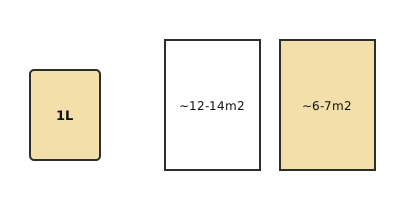
Coverage varies more than most people expect between paint types, so the "10-12m² per litre" quick-answer figure is really an average for a standard vinyl matt emulsion. Vinyl silk and eggshell typically cover a similar 10-12m² per litre. Thicker, more premium matt emulsions (often marketed as one-coat or high-opacity formulas) can cover closer to 12-14m² per litre, while cheaper contract or trade-grade matt emulsions sometimes only manage 8-10m² per litre — always check the coverage figure printed on the specific tin rather than assuming a generic number, since it can move your total litre requirement by 20-30% either way.
Buying by tin size
UK paint typically comes in 2.5 litre, 5 litre, and occasionally 1 litre or 10 litre tins. Buying one larger tin is usually cheaper per litre than several small ones, but it's worth rounding your calculated total up rather than down — running out mid-wall on the second coat means an awkward pause and a real risk of a visible join if the new tin is even slightly different in mix or you're using a different batch. A common approach is to buy slightly more than the calculation suggests and keep the leftover for touch-ups, since walls inevitably pick up scuffs and marks over the following months.
Primer and undercoat
New plaster, bare wood, and significant colour changes (especially dark to light) all typically need a separate primer or undercoat layer in addition to the two topcoats already factored into the quick calculation above. New plaster specifically needs a diluted "mist coat" — usually the topcoat colour diluted around 10-20% with water for the very first coat — to stop the plaster absorbing paint unevenly. Budget for this as an extra coat's worth of coverage when planning quantities for a freshly plastered room.
Ceilings versus walls
Ceiling paint is sold separately from wall emulsion in many ranges and is formulated to be less prone to drips and spatter when painting overhead, though standard matt emulsion works perfectly well on a ceiling too if you'd rather buy one product. Calculate ceiling area as simply floor area (length × width) — the same square metreage whether painting up or down the room — and add it to your wall total if you're using the same product for both.
Frequently asked questions
Related calculators
Related services
Related articles
How Much Paint Do I Need? A Complete Room-by-Room UK Guide
The simple maths for working out exactly how much paint to buy — plus real coverage rates, coat counts, and the mistakes that waste the most paint and money.
How Much Does It Cost to Paint a Room or House in the UK?
Professional painting and decorating cost depends far more on preparation than paint. Realistic UK costs per room, and what actually drives the price.
How Many Rolls of Wallpaper Do I Need?
The real trade formula for working out how many rolls of wallpaper you need — strips, pattern repeat, and why area-based estimates get it wrong.
Prefer to leave it to the professionals?
Whether it's one room or a whole house, our painting and decorating team can quote you a fixed price.
Get a Painting Quote